
What Are the Causes of Low White Blood Cell Count?
Seeing the word ‘low’ next to your white blood cell count on a complete blood count (CBC) report can be concerning. White blood cells are your immune system’s front line, they identify and destroy bacteria, viruses, and other foreign invaders. A low result naturally triggers concern: what causes a low count, and should you be worried?
The reassuring truth is that the causes of a low white blood cell count range from temporary and harmless issues to conditions requiring medical attention. A single low reading rarely tells the whole story. This guide walks through what the result means, its primary causes, warning symptoms, and what clinicians evaluate next in plain, accessible language.
What Does a Low White Blood Cell Count Mean?
Try it: enter your values in our free CBC Report Explainer and get a plain-English explanation of each result.
A white blood cell count below your laboratory’s standard reference range is clinically termed leukopenia. Because white blood cells defend your body against infection, having fewer of them can leave you more vulnerable to illness though a mildly low result in an otherwise healthy individual is frequently temporary and harmless.
Your report’s reference range matters because “low” is relative: it varies by age, sex, medical history, and the specific instruments a laboratory uses. Clinicians look beyond the total count to the differential the percentage breakdown of neutrophils, lymphocytes, monocytes, eosinophils, and basophils.
The Absolute Neutrophil Count (ANC) receives special attention because neutrophils are the primary defense against acute bacterial infections. Severe neutropenia typically refers to an ANC below 500 cells per microliter, though specific clinical thresholds vary between laboratories.
Normal vs. Low White Blood Cell Count Ranges in Adults
| Adult WBC (×10⁹/L) | Category | Clinical Interpretation |
|---|---|---|
| 4.5 – 11.0 | Normal | Within standard adult reference limits. |
| Below 3.0 | Low (Leukopenia) | Notably below typical range — requires clinical evaluation. |
| 3.0 – 4.4 | Mildly Low | Slightly below standard range — frequently transient. Clinicians generally order a repeat test in 2–4 weeks. |
| Above 11.0 | High (Leukocytosis) | Above typical range — often indicates active infection, tissue stress, or inflammation. Interpreted alongside symptoms. |
This table serves as a general guide for adults. Individual laboratories set their own specific reference intervals, and doctors will always evaluate your neutrophil count alongside your complete clinical picture.
Causes of Low White Blood Cell Count (Leukopenia)
White blood cells fall when bone marrow production slows down, when cells are consumed or destroyed faster than the body can replace them, or when they are sequestered away from active circulation. Below are the causes of low white blood cell count organized by category.
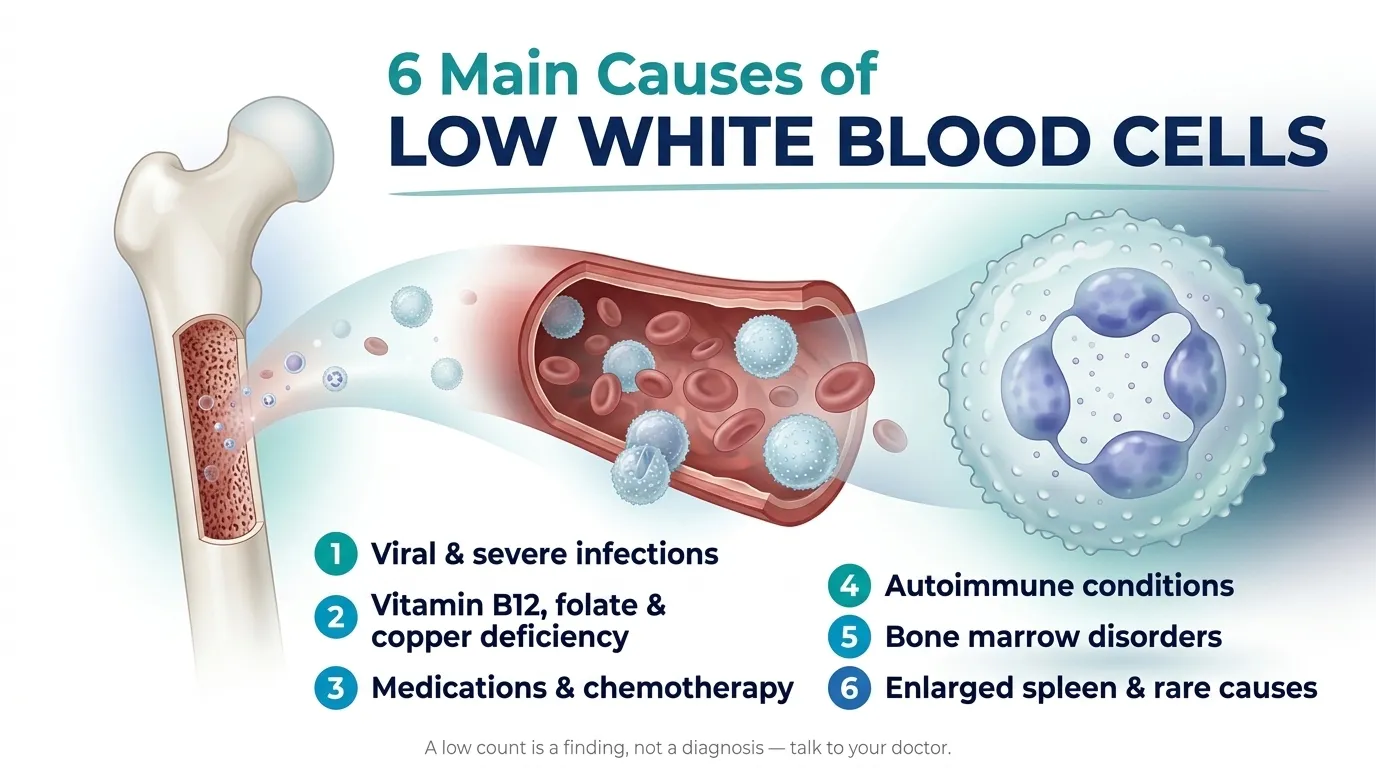
1. Viral Infections
Certain acute viral infections temporarily suppress bone marrow production or draw heavily on circulating white blood cells. Well-documented examples include:
- Common Respiratory Viruses: Influenza, RSV, and acute COVID-19.
- Systemic Viruses: Epstein–Barr virus (EBV / glandular fever), cytomegalovirus (CMV), and acute viral hepatitis (Hepatitis B and C).
- Parvovirus B19 & HIV: Directly impair blood cell development pathways.
In these instances, counts usually recover naturally within 2 to 6 weeks as the viral illness clears.
2. Bacterial Infections (Sepsis)
While everyday bacterial infections typically trigger an elevated count, severe systemic infections such as sepsis can consume circulating neutrophils far faster than the marrow can manufacture them. This rapid drop is a critical clinical warning sign that requires urgent medical attention.
3. Nutritional Deficiencies
Bone marrow requires a steady supply of micronutrients to maintain rapid cellular turnover:
- Vitamin B12 and Folate (B9): Crucial for DNA synthesis. Deficiencies cause megaloblastic changes that lower white cells alongside red blood cells and platelets.
- Copper Deficiency: Less common, but seen after bariatric surgery, chronic malabsorption, or excessive zinc intake. It directly limits neutrophil maturation.
Treating confirmed deficiencies through dietary changes or targeted supplementation generally restores cell counts to normal.
4. Medications and Therapies
Numerous medications can cause leukopenia or neutropenia as a known side effect:
- Chemotherapy and Radiotherapy: Cancer treatments that target fast-dividing cells, which can temporarily reduce bone marrow output and lower white blood cell counts.
- Antithyroid Medications: Drugs used to treat an overactive thyroid, which carry a recognized risk of causing sudden drops in neutrophil levels.
- Certain Psychiatric Medications: Specific therapies used for mood or psychotic disorders that require regular blood count monitoring due to their potential effect on white blood cells.
- Selected Antibiotics and Anticonvulsants: Certain anti-infective medications and anti-seizure drugs that can occasionally suppress bone marrow function.
- Immunosuppressive Drugs: Medications prescribed after organ transplants or to manage chronic autoimmune and inflammatory disorders by dampening immune activity.
Never stop or change a prescribed medication on your own because of a blood test result. If a drug is suspected of lowering your counts, your doctor can safely evaluate the dosage or consider alternative treatment options.
5. Autoimmune Diseases
In autoimmune conditions, the immune system produces autoantibodies that mistakenly attack the body’s own cells or the marrow environment:
- Systemic Lupus Erythematosus (SLE): Frequently associated with reduced numbers of both neutrophils and lymphocytes.
- Rheumatoid Arthritis: Particularly in Felty’s syndrome, a triad of rheumatoid arthritis, an enlarged spleen, and low neutrophils.
- Sjögren’s Syndrome: An autoimmune condition that targets moisture-producing glands (leading to chronic dry eyes and mouth) and can occasionally cause a mild, persistent reduction in white blood cells.
Treating the underlying autoimmune condition usually helps white blood cell levels normalize.
6. Primary Bone Marrow Disorders
Because white blood cells originate in the bone marrow, structural or cellular disorders within marrow tissue naturally reduce production:
- Aplastic Anemia: An autoimmune destruction of stem cells that halts production across red cells, white cells, and platelets.
- Myelodysplastic Syndromes (MDS): A group of disorders where blood cells fail to mature properly inside the bone marrow.
- Blood Cancers: Leukemias, lymphomas, and multiple myeloma can crowd out normal cell-producing spaces.
Doctors usually investigate these conditions only when cytopenias persist without a clear temporary cause.
7. Splenic Sequestration (Hypersplenism)
The spleen filters and removes old or damaged blood cells. When the spleen becomes significantly enlarged, often due to chronic liver disease, portal hypertension, or certain systemic infections, it traps and destroys healthy white blood cells and platelets prematurely.
8. Genetic and Benign Baseline Variations
- Benign Ethnic Neutropenia (BEN): Linked to the Duffy-null blood group antigen, this is a completely harmless, healthy baseline seen in many people of African, Middle Eastern, and Caribbean descent. It carries no increased risk of infection.
- Cyclic Neutropenia: A rare genetic condition characterized by cyclical drops in neutrophil levels roughly every 21 days.
Symptoms of Leukopenia
Leukopenia itself rarely causes noticeable symptoms. Most individuals only discover they have a low white blood cell count through a routine Complete Blood Count (CBC) test.
When symptoms do occur, they are generally not caused by the low cell count itself, but rather by secondary infections that develop because the immune system’s defenses are compromised.
Key signs and infection-related symptoms to watch for include:
- General Infection Signs: Unexplained fever (38°C / 100.4°F or higher), sudden sweating, or shaking chills.
- Mouth and Throat Issues: Painful mouth sores (canker sores), bleeding gums, or a severe, persistent sore throat.
- Skin Infections: Painful skin boils, redness, swelling, or minor cuts and scrapes that heal unusually slowly.
- Respiratory Symptoms: A persistent cough, shortness of breath, or sinus congestion.
- Urinary Changes: Burning, stinging, or increased pain during urination.
- Frequent or Lingering Illnesses: Catching common infections repeatedly or taking much longer than usual to recover from them.
Does a Low WBC Count Make You Feel Tired?
Not directly. Low white blood cells do not create physical fatigue on their own. However, underlying conditions linked to leukopenia, such as Vitamin B12 deficiency anemia, chronic viral infections, or autoimmune flare-ups, frequently lead to persistent exhaustion.
How Doctors Interpret Leukopenia
A low WBC count is a clinical clue rather than a final diagnosis. A doctor will typically assess:
- The Differential: Looking specifically at absolute neutrophil count (ANC) versus lymphocyte counts.
- Historical Comparison: Checking older lab results to determine whether the reading is brand new, worsening, or a stable personal baseline.
- Other Cell Lines: Reviewing hemoglobin and platelet counts to rule out broader marrow involvement (such as bicytopenia or pancytopenia).
Is Leukopenia Cancer?
No, leukopenia is not cancer. It is simply a laboratory measurement indicating that your total white blood cell count sits below the standard reference range.
While some blood cancers can cause leukopenia by crowding marrow space, benign causes, such as recent viral illnesses, vitamin shortages, and medication reactions are overwhelmingly more common. A low reading on its own is never a diagnosis of cancer.
How to Treat and Improve a Low White Cell Count
There is no one-size-fits-all cure for leukopenia because treatment directly depends on the cause:
- Infections: Treated with antimicrobial medicines when indicated, or given time to clear if viral.
- Nutritional Shortages: Corrected with targeted oral or injectable B12, folate, or copper.
- Medication Effects: Handled by a doctor adjusting the dose, temporarily pausing the medication, or switching to an alternative.
- Autoimmune & Marrow Conditions: Managed with condition-specific therapies under a specialist’s supervision.
- Growth Factor Injections: In oncology, specialized growth factors (such as G-CSF) are routinely prescribed to stimulate neutrophil production during chemotherapy.
Can You Increase White Blood Cells Naturally?
While healthy habits support the marrow’s natural functions, lifestyle changes cannot reverse genetic neutropenia or overcome chemotherapy-induced suppression. You can support baseline immunity by:
- Eating adequate protein, leafy greens, legumes, and nutrient-dense foods.
- Prioritizing 7 to 9 hours of quality sleep nightly to aid immune cell regulation.
- Practicing strict hand hygiene and safe food preparation to avoid preventable infections while counts are low.
Note: No herbal tonic, superfood, or unverified supplement is clinically proven to rapidly raise low white blood cell counts. Supplements should only be taken when specific deficiencies are confirmed by a physician.
Low White Blood Cell Count During Chemotherapy
Chemotherapy-related drops require close communication with your oncology team:
- Watch for the Nadir: White blood cell counts usually reach their lowest point between 7 and 14 days after each treatment cycle.
- Report Fevers Immediately: A temperature of 38°C (100.4°F) or higher during chemotherapy is a medical emergency known as febrile neutropenia. Contact your oncology unit right away rather than waiting for symptoms to pass.
When Should You See a Doctor About Leukopenia?
You should arrange a medical review if:
- Your low count persists on a repeat CBC test scheduled 2 to 4 weeks later.
- Your low WBC count is accompanied by low red blood cells or low platelets.
- You experience recurrent, slow-healing infections, persistent fatigue, or unexplained weight loss.
Frequently Asked Questions About Leukopenia
Why is my white blood count low?
A low white blood cell count is most commonly caused by recent viral infections, vitamin B12 or folate deficiencies, and medications like chemotherapy. Less frequently, autoimmune conditions, bone marrow disorders, or an enlarged spleen are responsible. Your doctor evaluates your clinical history and lab trends to identify the exact cause.
Does a low white blood cell count make you feel tired?
No, a low white blood cell count does not directly cause physical fatigue. However, underlying conditions associated with leukopenia, including vitamin B12 deficiency anemia, chronic viral infections, and active autoimmune diseases, frequently cause persistent tiredness.
Can white blood cell counts be increased?
Yes, white blood cell counts usually recover once the underlying cause is resolved. Addressing nutritional deficiencies, switching problematic medications, or recovering from a viral illness allows counts to normalize. In oncology, doctors use specialized growth factors (G-CSF) to stimulate production.
How can I boost white blood cells quickly at home?
There is no clinically proven food, supplement, or home remedy that can rapidly raise white blood cells. While a balanced diet, adequate sleep, and infection prevention support overall immune health, genuine leukopenia requires a professional medical diagnosis rather than home treatments.
Is leukopenia always serious?
No, leukopenia is not always serious. Many cases are mild, temporary, and resolve naturally after a minor infection clears. It becomes clinically concerning when counts drop severely, continue to decline over time, or occur alongside persistent, recurrent infections.
Final Thoughts
The causes of a low white blood cell count range widely including infections, nutritional deficiencies, certain medications, autoimmune conditions, and bone marrow disorders. What your result means ultimately depends on the root cause, how low the count is, and which specific types of white blood cells are affected.
If your lab report shows a low count, resist the urge to self-diagnose. Share your results with a qualified healthcare professional who can interpret them in the context of your complete health picture.
Want to understand your blood tests better? Explore our clinical laboratory guides, blood test explainers, and evidence-based health resources at MFZ Clinical Lab.
References
- MedlinePlus — White Blood Count (WBC). U.S. National Library of Medicine. https://medlineplus.gov/lab-tests/white-blood-count-wbc/
- Mayo Clinic — Low blood cell counts: Side effects of cancer treatment. https://www.mayoclinic.org/diseases-conditions/cancer/in-depth/cancer-treatment/art-20046192
