
ABO Blood Group System: The Complete Guide to A, B, AB, and O Blood Types
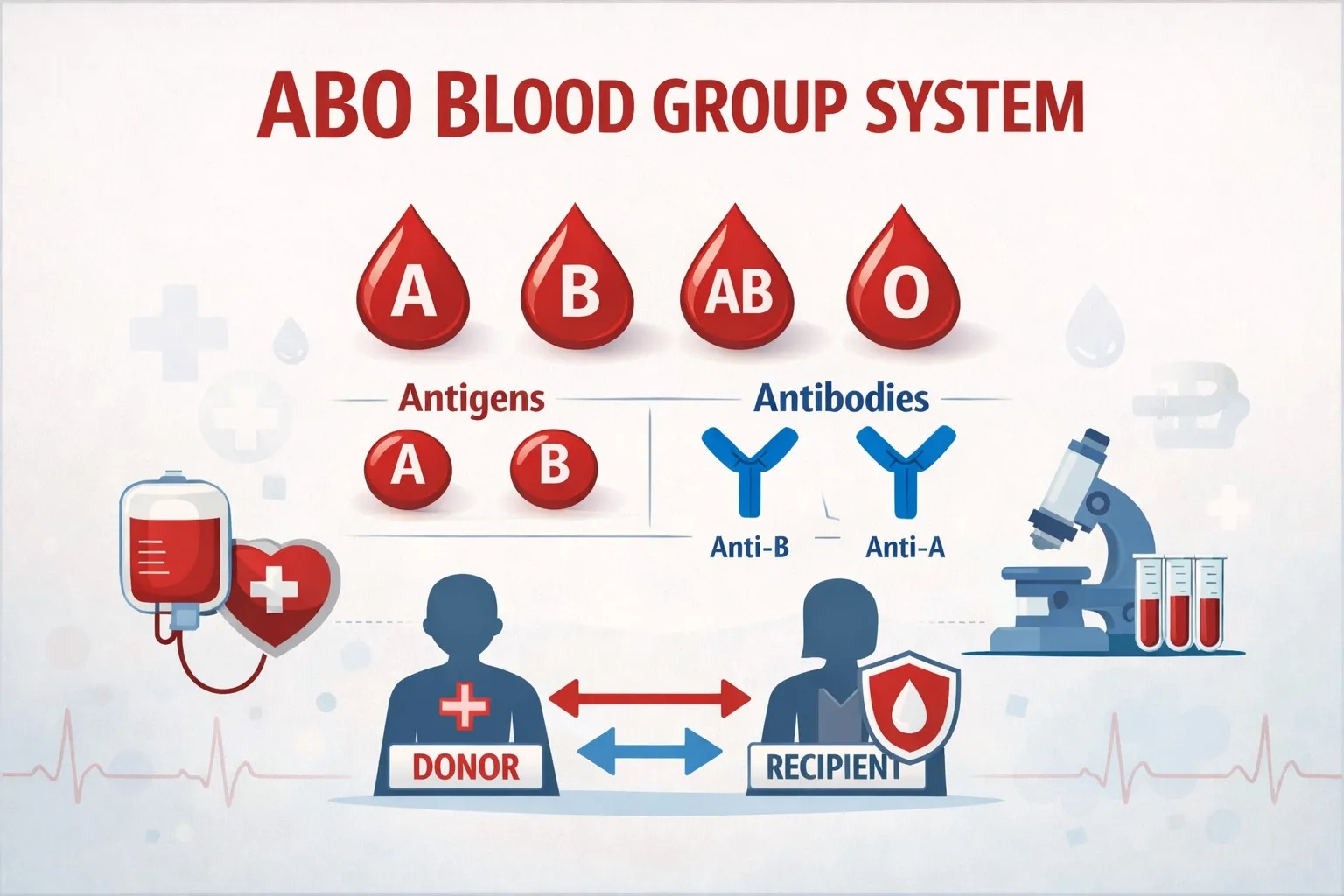
Not all blood is the same, and giving the wrong blood type during a transfusion can cause serious complications. The ABO blood group system helps prevent such risks by classifying blood into four types: A, B, AB, and O based on specific antigens found on red blood cells. Since its discovery, this system has become a cornerstone of modern medicine, guiding safe transfusions, organ matching, and laboratory testing. In this article, we break down its discovery, genetics, biochemical features, and practical importance in clinical care.
Historical Discovery of Blood Typing
In 1900, Austrian immunologist Karl Landsteiner discovered that blood could be classified into different groups based on specific antigens present on red blood cells. He identified three major groups: A, B, and O, and later AB as a combination of both A and B antigens. This discovery revolutionized medicine by allowing for safe blood transfusions and organ transplants.
Landsteiner’s findings earned him the Nobel Prize in 1930, and his work laid the foundation for modern transfusion medicine. His discovery also introduced antibodies, which help prevent immune reactions in the case of blood incompatibility.
What is the ABO Blood Group System?
The ABO blood group system is the classification of human blood based on the presence or absence of A and B antigens on the surface of red blood cells. These antigens are complex carbohydrates attached to proteins or lipids on the red blood cell membrane.There are four main blood types in the ABO system:
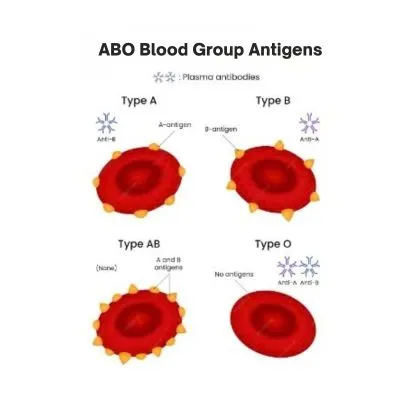
- Type A: Has A antigens on red blood cells and anti-B antibodies in the plasma.
- Type B: Has B antigens on red blood cells and anti-A antibodies in the plasma.
- Type AB: Has both A and B antigens on red blood cells and no anti-A or anti-B antibodies in the plasma.
- Type O: Lacks both A and B antigens on red blood cells and has anti-A and anti-B antibodies in the plasma.
The ABO system is crucial for determining blood compatibility in transfusions and organ transplants. Mismatched blood transfusions can lead to severe immune reactions, so understanding the ABO system helps prevent such complications.
Blood Type Compatibility for Transfusions
Blood type compatibility in transfusions depends mainly on the ABO blood group system and the Rh factor, which together help determine safe donor and recipient matches.
| Blood Type | Can Donate RBCs To | Can Receive RBCs From |
|---|---|---|
| O- | O-, O+, A-, A+, B-, B+, AB-, AB+ | O- |
| O+ | O+, A+, B+, AB+ | O+, O- |
| A- | A-, A+, AB-, AB+ | A-, O- |
| A+ | A+, AB+ | A+, A-, O+, O- |
| B- | B-, B+, AB-, AB+ | B-, O- |
| B+ | B+, AB+ | B+, B-, O+, O- |
| AB- | AB-, AB+ | AB-, A-, B-, O- |
| AB+ | AB+ | AB+, AB-, A+, A-, B+, B-, O+, O- |
Note: This table applies to red blood cell (RBC) transfusion only. Plasma and platelet compatibility follow different rules.
Importance of the ABO Blood Group System in Clinical Practice
The ABO blood group system is crucial in clinical practice for several key reasons. One of the most important uses is in blood transfusions, where the compatibility of blood types can be life-saving. Incompatible blood transfusions can result in serious immune reactions, including hemolysis (destruction of red blood cells).
Additionally, the ABO system is vital in organ transplantation to prevent organ rejection. Blood type matching is essential for transplant success. Furthermore, the ABO system plays a role in maternal-fetal incompatibility in pregnancy, particularly in the case of ABO incompatibility, which can lead to mild hemolytic disease of the newborn (HDN).
In sum, the ABO blood group system is a cornerstone of modern medicine, ensuring patient safety in clinical settings through proper blood and organ compatibility.
Antigens and Antibodies in ABO blood typing
Antigens are specific molecules found on the surface of red blood cells that help identify a person’s blood type. In the ABO blood group system, the main antigens are A and B. Antibodies are proteins present in the plasma that react against foreign antigens not normally found in the body. If incompatible blood types are mixed, these antibodies can attack donor red blood cells and trigger a harmful immune reaction.
| Blood Type | Antigens Present | Antibodies in Plasma | Reaction in Case of Incompatibility |
|---|---|---|---|
| Type A | A antigen | Anti-B antibodies | Hemolysis (destruction of red blood cells) if mixed with B or AB |
| Type B | B antigen | Anti-A antibodies | Hemolysis if mixed with A or AB |
| Type AB | A and B antigens | None | Can receive blood from all types (universal recipient) |
| Type O | None | Anti-A and Anti-B | Can donate to all types (universal donor) |
Biochemistry of ABO Blood Groups
The ABO blood group system is based on specific carbohydrates attached to proteins or lipids on the surface of red blood cells. These carbohydrates are responsible for the A and B antigens that determine an individual’s blood type. The presence or absence of these antigens plays a crucial role in determining blood compatibility.
A and B Antigens:
The A and B antigens are formed by the addition of specific sugar molecules to a precursor substance called the H antigen. The enzymes encoded by the IA and IB alleles of the ABO gene add these sugars to the H antigen.
- A Antigen: The addition of N-acetylgalactosamine (a sugar molecule) to the H antigen results in the A antigen.
- B Antigen: The addition of galactose (a different sugar molecule) to the H antigen results in the B antigen.
The presence of these antigens determines whether the blood type is A, B, or AB (where both antigens are present).
O Blood Type:
Individuals with type O blood do not have either A or B antigens on their red blood cells. Instead, they possess anti-A and anti-B antibodies in their plasma. These antibodies are responsible for recognizing and attacking foreign antigens if mixed with incompatible blood types. Type O blood is considered the universal donor for blood transfusions because it lacks both A and B antigens, making it compatible with all other blood types.
Molecular Structure of ABO Blood Groups
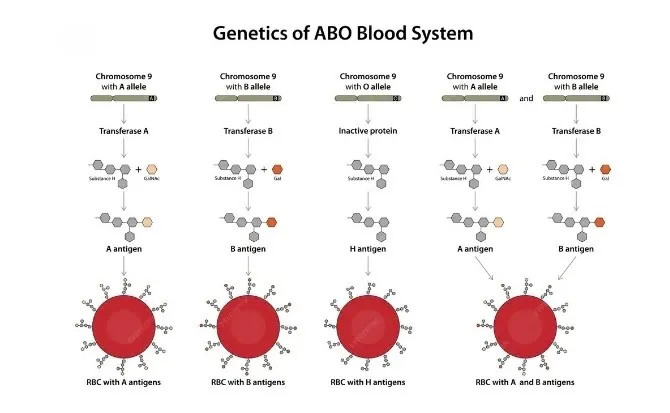
The ABO blood group system is controlled by the ABO gene, located on chromosome 9. This gene is responsible for encoding glycosyltransferases, which are enzymes that add specific sugar molecules to the surface of red blood cells, forming the A, B, or O antigens. The ABO locus consists of three alleles: IA, IB, and i, which determine the type of antigen expressed on the red blood cells. The H locus (located on chromosome 19) is also involved, as it produces the H antigen, which acts as a precursor to the A and B antigens.
- A allele (IA): adds a sugar called N-acetylgalactosamine → creates the A antigen.
- B allele (IB): adds a sugar called galactose → creates the B antigen.
- O allele (i): doesn’t add any sugar → the H antigen stays unchanged → results in blood type O.
- AB blood type (IA + IB): A transferase adds N-acetylgalactosamine and B transferase adds galactose to the H antigen → red blood cells express both A and B antigens → results in blood type AB.
If you inherit both IA and IB, your cells express both A and B antigens, giving you blood type AB.
Subgroups of ABO Blood Group System
In addition to the main four blood types, there are rare subgroups within the ABO blood group system. These subgroups differ in the structure of antigens found on the red blood cells. Some of the notable subgroups include:
Rare ABO Blood Groups:
Bombay Blood Group (hh): This extremely rare blood type lacks the H antigen, which is a precursor for both A and B antigens. People with this blood type cannot express A or B antigens, even though they may carry the A or B gene. The Bombay blood group is important in transfusion medicine because individuals with this blood type require a specific match, as standard O type blood is not compatible.
Subgroups of A and B: Blood type A and B also have recognized subgroups (subtypes) because the A and B antigens can vary slightly in their structure and expression on red blood cells. For Type A, the most common subgroups are A1 and A2 (with A1 being more frequent), while rarer variants like A3, Ax, and Ay may show weaker or unusual antigen patterns.
Similarly, Type B can include less common variants such as B3, Bx, and By, which are typically identified in advanced blood typing when standard results look unclear. These subgroups matter most in blood transfusion compatibility and laboratory matching, especially when reactions appear weak or inconsistent.
Global Frequency of ABO Blood Groups
The distribution of ABO blood types varies significantly across different regions and populations. Here is an overview of the global frequency of each blood type:
- Type O: The most common blood type worldwide, especially in Latin America and parts of Africa. In many populations, the O blood type can make up over 40% of the population.
- Type A: This blood type is most prevalent in European populations, where it can make up around 30-40% of the population.
- Type B: More common in parts of Asia, particularly in countries like India, China, and Japan. Around 20-30% of people in these regions may have type B blood.
- Type AB: The rarest blood type globally, comprising around 5% of the population. It is most commonly found in Asian populations, especially in Japan and Korea.
These frequencies highlight the genetic diversity in human populations and the importance of understanding blood group distributions for clinical practices like blood donation and transfusions.
ABO and Rh blood groups: Key differences
While the ABO and Rh blood group system are both crucial for blood compatibility, they differ in key ways:
| Feature | ABO Blood Group System | Rh Blood Group System |
|---|---|---|
| Antigens | A and B antigens | Rh factor (D antigen) |
| Main Blood Types | A, B, AB, O | Rh-positive (Rh+), Rh-negative (Rh-) |
| Compatibility Importance | Essential for transfusions and organ transplants | Critical in pregnancy, especially for Rh-negative mothers |
| Inheritance | Inherited through ABO gene on chromosome 9 | Inherited through Rh gene on chromosome 1 |
| Clinical Relevance | Blood compatibility and organ transplantation | Prevention of Rh incompatibility during pregnancy |
Clinical Applications of the ABO Blood Group Classification
Clinical applications of the ABO blood group classification are:
Blood Transfusion Compatibility:
The ABO blood group classification is crucial for matching donor and recipient blood in transfusions, ensuring compatibility and preventing harmful immune reactions like hemolysis (red blood cell destruction).
Organ Transplant Compatibility:
The ABO blood typing system is essential for organ transplantation, ensuring the transplanted organ is accepted by the recipient’s immune system and minimizing the risk of rejection.
Paternity and Genetic Testing:
The ABO blood typing system is widely used in paternity tests and genetic studies to determine biological relationships and verify inheritance patterns.
Diagnosis of Hematological Disorders:
Blood type identification, based on the ABO classification, plays a significant role in diagnosing blood-related diseases like anemia and helps assess compatibility for specific treatments.
Management of Hemolytic Disease of the Newborn (HDN):
The ABO blood group system aids in managing HDN, where blood group incompatibility between the mother and newborn can lead to complications, such as neonatal jaundice.
Maternal-Fetal Blood Group Incompatibility:
ABO blood typing helps in assessing the risks of incompatibility between the mother’s and newborn’s blood types during pregnancy, preventing complications in the infant, including jaundice.
Conclusion
The ABO blood group system is a key part of safe medical care because it helps doctors and labs match blood correctly for transfusions and organ transplants. When you understand how ABO types work including the antigens on red blood cells and the antibodies in plasma, it becomes easier to see why compatibility matters so much.
At the same time, ABO is not the only system that affects safety. Rare types like the Bombay blood group can make matching more complex, and the Rh blood group system also plays an important role. At MFZ Clinical Lab, we publish educational content like this to explain blood grouping and related topics clearly and responsibly.
1. What is the ABO blood group system?
The ABO blood group system classifies blood into A, B, AB, and O based on specific antigens on red blood cells. It is essential for safe blood transfusions and compatibility.
2. What are the 3 rarest blood groups?
The three rarest blood groups are AB-negative, B-negative, and Rh-null. These types are uncommon worldwide and require careful matching for safe blood transfusions.
3. What is the ABO system in human beings an example of?
The ABO system in human beings is an example of multiple alleles inheritance, where more than two alleles control a single trait. It also shows codominance, as both A and B alleles are expressed together in AB blood type.
4. Is ABO blood type related to disease risk?
Yes, ABO blood type has been linked to certain disease risks, such as heart disease, blood clots, and some infections. However, blood type is only one factor and does not determine overall health on its own.
5. Which disease is common in blood group B?
Some studies suggest that people with blood group B may have a slightly higher association with type 2 diabetes. However, blood group alone does not cause disease and overall risk depends on lifestyle and genetics.
Medical Disclaimer:
This content is for informational purposes only and should not be considered medical advice. It does not replace professional diagnosis or treatment. Always consult a qualified healthcare provider for personal medical concerns.

2 thoughts on “ABO Blood Group System: The Complete Guide to A, B, AB, and O Blood Types”
Sign up and turn your connections into cash—join our affiliate program!
Pingback: Rh Blood Group System: Transfusion & Pregnancy Care